
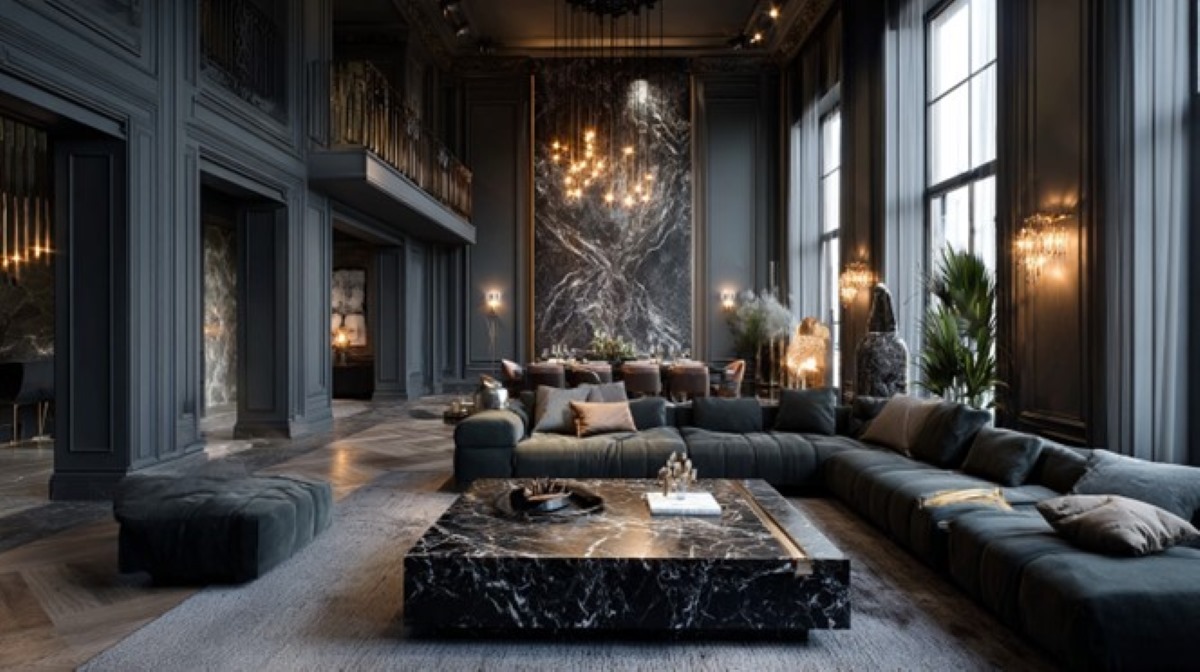
Walk into a truly memorable home and the feeling is immediate. The space feels calm, confident, and quietly dramatic. Nothing appears excessive, yet every element seems intentional. Designers often describe this quality as effortlessness, but in my experience the effect comes from careful editing, material restraint, and a strong understanding of atmosphere.
Many luxury interiors are moving away from stark brightness and returning to spaces with greater depth and character. Rich woods, darker palettes, sculptural silhouettes, and layered textures are appearing in contemporary homes from Manhattan penthouses to coastal modern residences. The result is an environment that feels thoughtful rather than decorative.
Moody interiors are not defined by darkness alone. They rely on contrast, balance, and a quiet sense of presence that gives a room its personality.
The Return of Atmosphere in Luxury Interiors
For several years, bright minimalist interiors dominated design magazines. White walls, pale oak floors, and sparse decoration defined the aesthetic. While that approach remains popular, many designers are now embracing rooms with more depth and atmosphere.
Atmosphere has become an essential design ingredient.
Darker palettes allow materials to stand out with greater clarity. Walnut cabinetry, charcoal stone, bronze fixtures, and velvet upholstery gain visual richness against deeper backgrounds. The American Institute of Architects has reported growing interest in residential projects that prioritize natural materials and layered textures to create warmth within modern homes.
Why do darker interiors often feel more sophisticated? Contrast plays a large role. Light behaves differently against deeper surfaces, creating subtle shadows and dimensionality that bright spaces sometimes lack. Designers also point to psychology. Research in environmental design suggests that darker environments can feel more intimate and grounded, particularly when paired with warm lighting and tactile materials.
Still, a moody palette alone does not produce an elegant space. Without thoughtful composition, darker rooms can quickly feel heavy. Designers rely on proportion, lighting, and sculptural forms to maintain visual balance.
Foundational Pieces That Shape the Mood of a Room
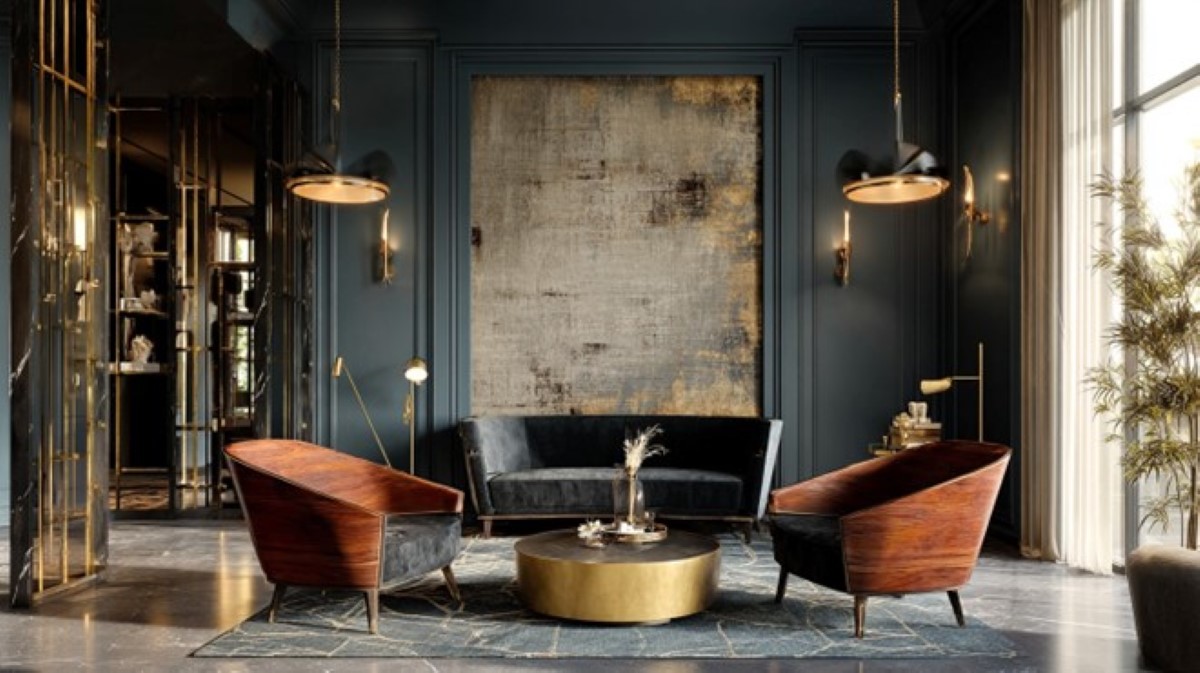
Most experienced designers begin a project by identifying one or two defining elements that establish the character of a space.
It might be a deeply toned dining table, a sculptural lounge chair, or a dramatic sofa that anchors the living room. Once that visual foundation exists, the rest of the space evolves around it.
I have always believed restraint is one of the defining traits of sophisticated interiors. Rather than filling a room with decorative objects, designers often rely on a handful of carefully chosen pieces. This approach allows materials and craftsmanship to stand out.
Brands known for sculptural silhouettes and refined materials frequently inspire these foundational elements. Collections from AURA Modern Home, for example, reflect how thoughtfully designed pieces can set the tone of a room while maintaining visual clarity. Designers seeking this balance often turn to sources recognized for curated selections of luxury modern furniture that emphasize proportion, form, and material quality.
The real impact comes from scale and placement. A single striking piece positioned within a well-composed space can shape the atmosphere of an entire room.
A Modern Design Language Built on Depth and Contrast

The moody interior aesthetic appearing in many luxury homes today is not tied to a single movement. Instead, it draws inspiration from several traditions that share an appreciation for strong materials and disciplined composition.
Art Deco provides one reference point. Rich woods, geometric forms, and brass accents create interiors that feel dramatic yet refined. When used with restraint, these elements pair beautifully with contemporary architecture.
Mid-century design contributes another influence. Designers continue to admire the period’s sculptural silhouettes and warm wood tones. Walnut credenzas, curved lounge chairs, and low-profile sofas introduce visual rhythm without overwhelming the room.
Japandi design also plays a role. This approach blends Japanese simplicity with Scandinavian warmth, emphasizing quiet materials, natural textures, and an appreciation for empty space. Darker variations of this style create interiors that feel calm yet deeply atmospheric.
More recently, what many designers call dark organic modern has gained popularity. This style combines deep tones with natural materials such as stone, clay, linen, and wood. The effect feels grounded and tactile while maintaining modern restraint.
Color-drenched interiors are appearing more frequently as well. Instead of contrasting walls with ceilings and trim, designers sometimes saturate an entire room in a single tone. Deep olive, charcoal, oxblood, and midnight blue create spaces that feel immersive and sophisticated.
These design traditions may look different at first glance, yet they share a common philosophy. Each emphasizes authentic materials, restrained palettes, and thoughtful spatial composition.
Common Mistakes When Designing Dark Interiors
Moody interiors require more discipline than brighter spaces. Without careful planning, the result can feel flat or overwhelming.
One common mistake is relying on dark paint alone. A room painted charcoal from wall to ceiling can quickly feel heavy if the materials inside the space lack contrast. Texture becomes essential. Leather, stone, linen, wood grain, and metal finishes introduce variation that prevents the palette from becoming monotonous.
Lighting is another frequent oversight. Designers rarely rely on a single overhead fixture. Instead, they layer light sources throughout the room. Floor lamps, wall sconces, table lamps, and concealed architectural lighting shape the mood while preventing dark areas from feeling dull.
Another mistake involves too many statement pieces. When every object competes for attention, the room loses its visual hierarchy. In my honest assessment, the most compelling interiors often contain fewer focal points than homeowners expect.
Ceilings and floors are also easy to overlook. A dark wall palette paired with a lighter ceiling or reflective flooring can maintain openness while preserving the room’s dramatic tone.
A Practical Framework for Creating a Dramatic Yet Balanced Interior

Designing a moody interior does not require complex rules. A simple framework can guide the process.
Start with one architectural anchor piece. This might be a dining table, sculptural sofa, or dramatic console that establishes the visual center of the room.
Build the palette around tone rather than a wide variety of colors. A restrained palette creates cohesion and allows materials to stand out.
Introduce contrast through texture and lighting. Stone surfaces, wood grain, woven textiles, and metallic accents create dimension within darker environments.
Limit the number of focal elements. When only a few pieces command attention, the entire room feels more composed.
Allow negative space to remain. Empty areas give the eye a place to rest and highlight the importance of the elements that remain.
Designers return to these principles repeatedly because they consistently produce interiors that feel balanced and timeless.
Trade-Offs When Designing with Dark Palettes
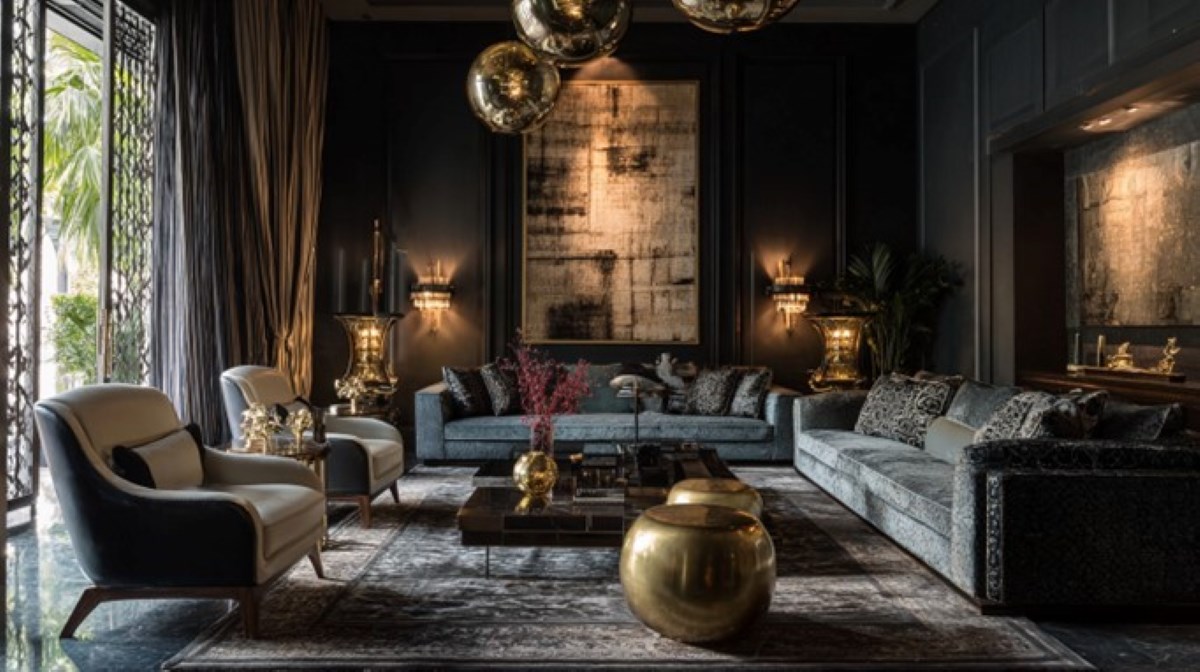
Dark interiors can be beautiful, but they do present certain challenges.
Lighting becomes particularly important. Without sufficient natural or layered lighting, deeper tones may absorb too much light and diminish the sense of space.
Material selection also matters more. When the palette is restrained, every texture becomes noticeable. Lower-quality finishes are easier to spot.
Some homeowners worry darker interiors will make smaller rooms feel cramped. In practice, the opposite can happen when designers balance darker tones with reflective surfaces, mirrors, or lighter ceilings.
Maintenance is another consideration. Dark surfaces can reveal dust or fingerprints more easily, especially on glossy finishes. Matte textures tend to provide a more forgiving alternative.
These factors do not make moody interiors difficult, but they do require thoughtful planning.
Why the Most Luxurious Rooms Feel Curated, Not Decorated
Luxury interiors rarely rely on abundance. Instead, they rely on intention.
Designers often spend more time deciding what to remove from a room than what to add. Editing creates clarity. Each object has space to be appreciated.
This philosophy appears across many of the world’s most elegant homes. A sculptural sofa placed within an open living area, a dramatic chandelier above a dining table, or a library-like study defined by rich wood tones can leave a stronger impression than rooms filled with ornament.
From my perspective, the most compelling interiors share a quiet confidence. They are composed with care, guided by material authenticity, and shaped by a respect for balance.
When atmosphere, proportion, and restraint come together, the result feels effortless. In reality, that sense of ease is the product of thoughtful design decisions made long before the room is experienced.